
Why cross-ministry collaboration on housing, health, and water must continue in Australia
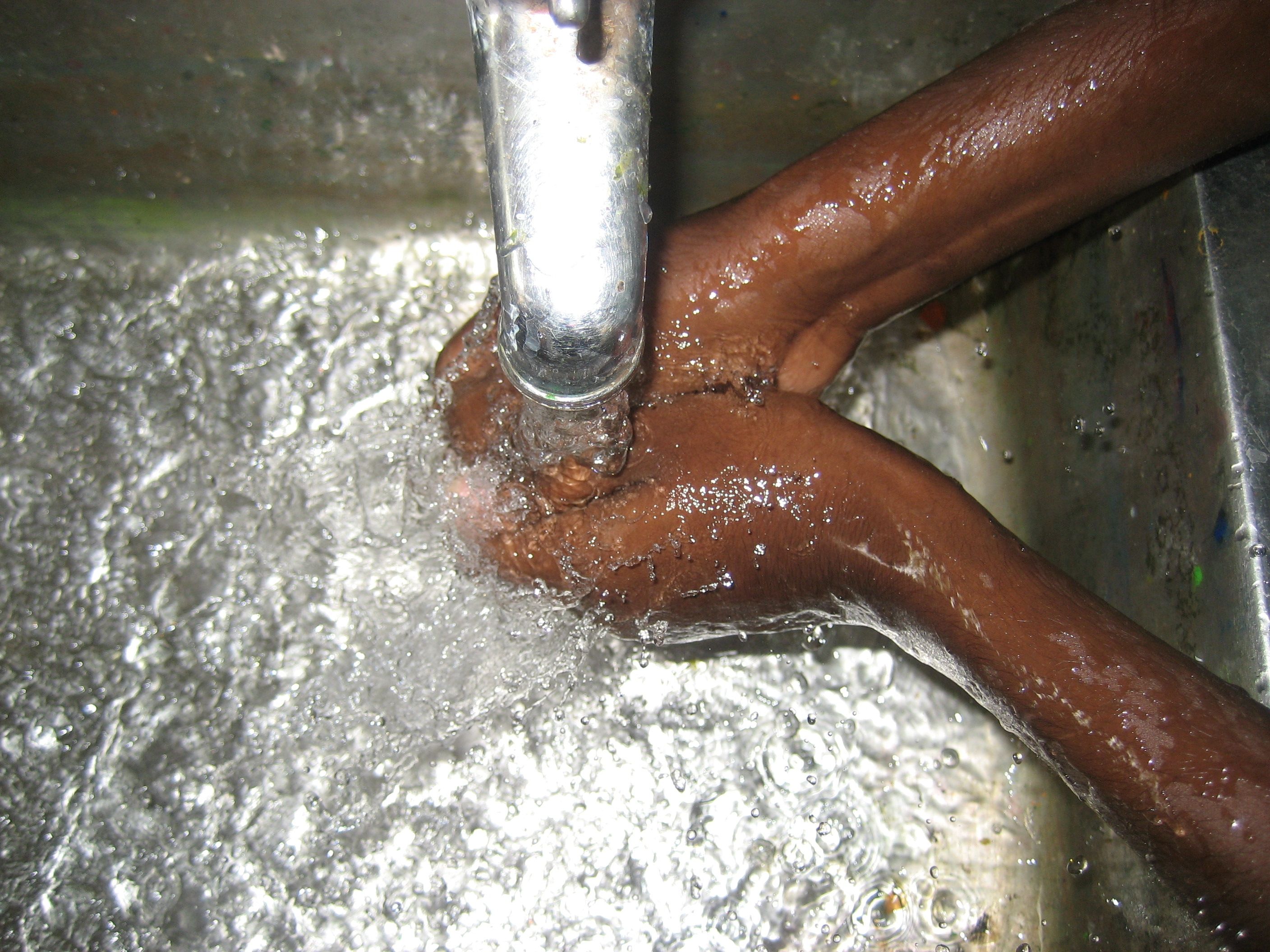
A World Water Week reflection from ICTC member Minum Barreng: Indigenous Eye Health Unit at the University of Melbourne
This World Water Week, there is genuine cause for celebration in Australia. On April 29, 2026, the World Health Organization (WHO) validated Australia as having eliminated trachoma as a public health problem, becoming the 30th country in the world to do so (this number has since grown to 32). It was a milestone achieved through decades of work by Aboriginal and Torres Strait Islander communities and community-controlled health organizations, alongside sustained government investment.
But elimination is not the end of the story. It is a point at which the hardest, least visible work, the "E" in the WHO's SAFE strategy, becomes more important, not less. Trachoma is eliminated through the SAFE strategy, which combines four interventions: Surgery for trichiasis, Antibiotics to clear infection, Facial cleanliness, and Environmental improvement. The first two are clinical and can be delivered in a season. The third is personal behavior, critical to stopping reinfection and reliant on the fourth: infrastructure. This is where housing, water, and hygiene, not health services alone, determine whether hard-won gains hold.
As Leeanne Caton, a Kalkadoon/Waanyi woman and CEO of Aboriginal Housing Northern Territory, states in its 2026-2029 strategic plan, there are too few houses, and many of them are very run-down: “All of these factors combine to limit health, education and employment prospects. For example, preventable diseases like trachoma and rheumatic heart disease persist in Aboriginal populations. Their prevalence is directly linked to poor housing including overcrowding.”
There are too few houses, and many of them are very run-down. All of these factors combine to limit health, education and employment prospects.
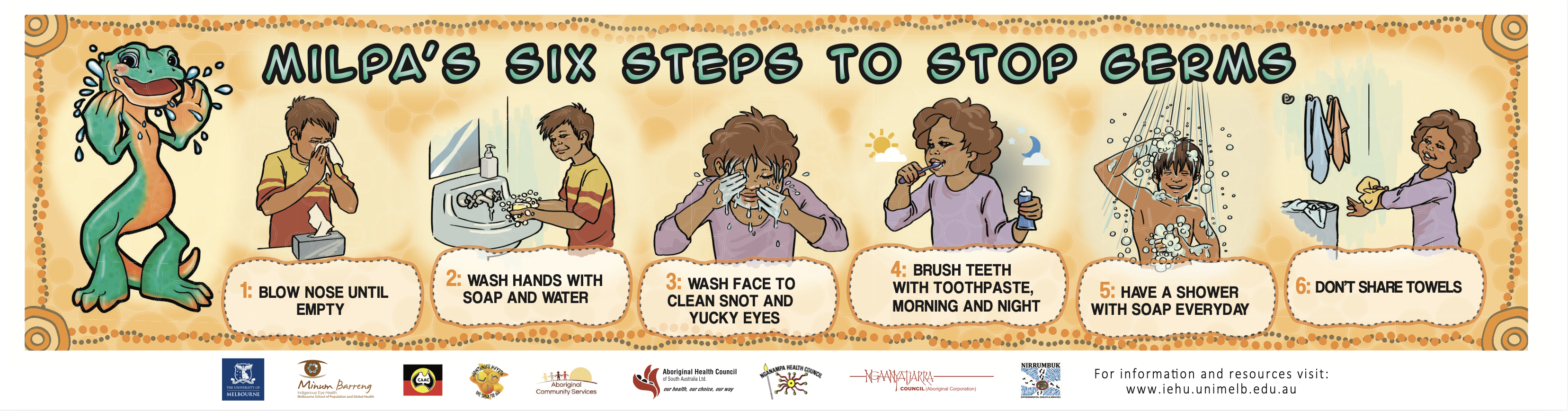
At Minum Barreng, our Healthy Homes work sits squarely in that "E" component of the SAFE strategy. Programs like Milpa's Six Steps to Stop Germs evolved from the trachoma facial cleanliness messages of ‘Clean Faces, Strong Eyes’ to include broader hygiene actions that also require access to water. The challenge is to promote the hygiene actions known to prevent trachoma and other infections common in overcrowded housing, but families can only act on that advice where the water actually runs, the taps work, and the wastewater system functions. Environmental improvement, in other words, is a housing and water portfolio responsibility as much as a health one. That is precisely why elimination in Australia has depended on cross-ministry collaboration, and why sustaining it will too.
An example comes from Central Australia. In 2018, we worked with the National Indigenous Australians Agency and the Centre for Disease Control to establish the Central Australian Environmental Health Working Group (CAEHWG), a standing forum that has now met at least four times a year for eight years, bringing health, local council, environmental health, and, at times, housing agencies to the same table. The CAEHWG has advocated to the Northern Territory Minister for Housing, providing a recurring mechanism that keeps environmental health on the agenda. We also partner through the Healthy Housing Officer role at Central Australian Aboriginal Congress and equivalent Healthy Homes Officer roles at Katherine West Health Board. These locally based positions support families to report the repairs needed to keep health hardware functioning, and we see them as proof of concept for what system-wide reform could look like.
Other jurisdictions have their own versions of this cross-portfolio approach. Western Australia employs Aboriginal Environmental Health Officers based in communities, who carry out audits and minor fixes in houses directly. They often partner with the housing department while they are in the community to address more significant problems. South Australia's housing agency works in close partnership with communities on the APY Lands (Aṉangu Pitjantjatjara Yankunytjatjara) to maintain homes collaboratively rather than through a landlord-tenant transaction. And at the Aboriginal Housing and Homelands Conference in Garramilla (Darwin) in May 2026, the Department of Housing, Local Government and Community Development in the Northern Territory signaled a shift toward planned, cyclical maintenance. This is significant given data showing that only 3% of repair and maintenance issues in Northern Territory housing are ever reported by tenants under the current reactive system. With roughly 82% of Northern Territory housing tenants being Aboriginal, as Department CEO Tom Leeming noted at the conference, getting this right is core government business, not a side program.
None of this is simple. Housing in Australia is delivered by states and territories but substantially funded by the Australian Government, a split that researchers, including Professor Marcia Langton, have argued leaves reporting and accountability badly fragmented. Community-led design work, such as Wilya Janta's Right Way Housing Guidelines, points to what better looks like: homes designed with, not for, the people who live in them, and built for local climate and culture rather than to a generic national "spec."
This World Water Week, our message is straightforward. Water, sanitation, and functioning health hardware are not peripheral to trachoma elimination; they are the mechanisms by which elimination is sustained. Australia's achievement could be a case study for other trachoma-endemic countries in what integrated SAFE delivery can accomplish. But it should also be a case study in what elimination demands afterward: standing cross-ministry structures, community-controlled housing and health organizations at the table, and sustained investment in the water infrastructure on which everyday hygiene depends. The clinical work is done, but support for community knowledge and understanding must continue. The environmental work, quite literally, never stops.
For further information iehu.unimelb.edu.au
Visit ICTC for Minum Barreng's case study on the evolution of ‘Clean Faces, Strong Eyes’ to ‘Milpa’s Six Steps to Stop Germs’.