
Australia eliminates trachoma as a public health problem
Australia has been validated by the World Health Organization (WHO) as having eliminated trachoma as a public health problem. It is the 30th country globally and eighth country in the WHO Western Pacific Region to achieve this milestone.
Trachoma largely disappeared from the general Australian population in the early 20th century, following major improvements in access to clean water and sanitation. However, national mapping in the 1970s showed that the disease persisted among Aboriginal and Torres Strait Islander peoples.
While incremental progress has been made, transmission continued in a number of remote Aboriginal and Torres Strait Islander communities in central, northern, and western Australia. These communities, often geographically isolated and relatively small, have faced persistent gaps in access to healthcare, safe housing, and essential services such as water and sanitation, creating conditions that have allowed trachoma to endure.
To address this, Australia established the National Trachoma Management Program and joined the WHO Alliance for the Global Elimination of Trachoma in 2006. The program implemented the SAFE strategy—Surgery, Antibiotics, Facial cleanliness, and Environmental improvement—through coordinated, locally adapted interventions.
Between 2007 and 2024, the number of communities at risk of trachoma declined substantially across all affected regions. Rather than implementing district-level mass drug administration, Australia adopted a targeted treatment approach, focusing on affected individuals, households, and communities based on local prevalence. The strategy reflected the relatively small, localized populations affected, enabling treatment to be delivered where needed while avoiding unnecessary interventions in areas where trachoma was not a public health problem.
Health promotion was also central to trachoma elimination efforts, particularly initiatives to improve facial cleanliness. Programs were co-designed with Aboriginal and Torres Strait Islander communities and delivered through partnerships with schools, primary healthcare services, and Aboriginal Community Controlled Health Services. Campaigns such as “Clean Faces, Strong Eyes” combined culturally relevant messaging with practical support, including hygiene resources and school-based education.
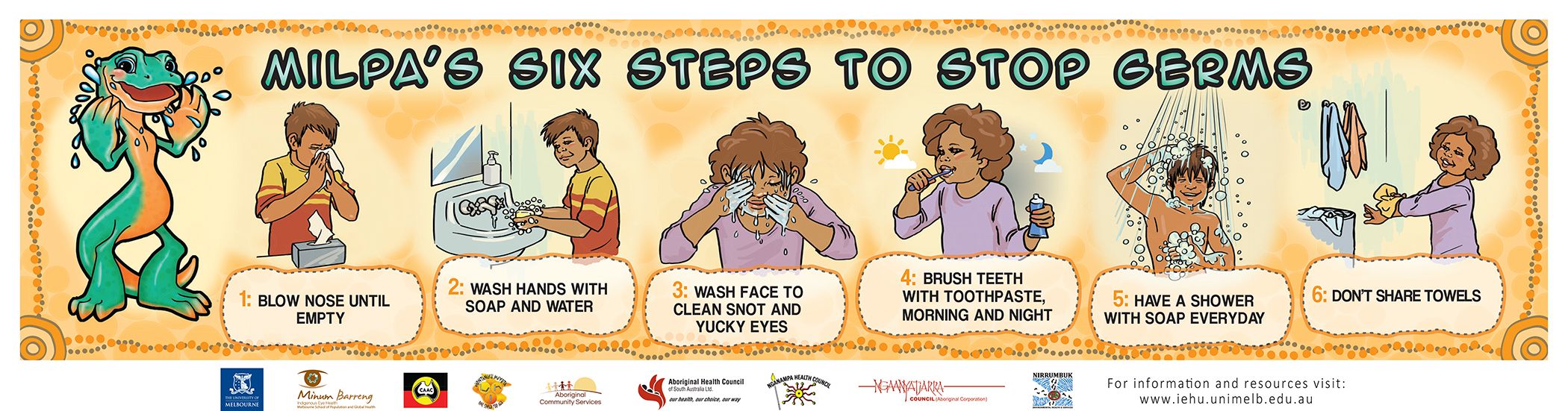
Screening programs also monitored facial cleanliness among children, with national targets set to encourage sustained improvements in hygiene practices. These efforts were supported by a diverse workforce, including nurses, public health staff, and Aboriginal and Torres Strait Islander Health Workers, who play a critical role in delivering culturally appropriate care.
Australia demonstrates why health equity must remain at the centre of trachoma elimination efforts. While trachoma had long ceased to be a public health problem for the wider population, it persisted in small and remote Aboriginal and Torres Strait Islander communities. This milestone underscores the importance of inclusive, community-led approaches to ensure no one is left behind and maximise progress towards universal health coverage. ICTC congratulates Aboriginal and Torres Strait Islander communities and the Government of Australia on this achievement.— Michaela Kelly, ICTC Chair
Australia’s path to elimination relied on sustained, cross-governmental collaboration to improve living conditions in trachoma-endemic communities. While access to safe drinking water and sanitation is near-universal nationally, disparities in infrastructure quality and housing persist in some remote areas. Since 2008, significant investment has been directed towards improving housing, water, and sanitation in Aboriginal and Torres Strait Islander communities, alongside efforts to strengthen local workforce capacity and community engagement. Reducing overcrowding and improving environmental health have been central to addressing the underlying drivers of transmission.
The elimination of trachoma as a public health problem in Australia follows several significant milestones for the global trachoma elimination program, including the elimination of trachoma in Algeria and Libya in February and April 2026, respectively. It also follows the announcement that the global population of people requiring interventions for trachoma has fallen below 100 million (as of November 2025) for the first time since records began – representing a 94% reduction since 2002.
Trachoma is targeted for elimination as a public health problem under Sustainable Development Goal (SDG) target 3.3 and the global neglected tropical diseases (NTD) roadmap for 2021–2030, which was endorsed by WHO Member States at the World Health Assembly in 2020. To achieve elimination, ICTC estimates that approximately USD $300 million is urgently needed to fill funding gaps for surgery, antibiotic mass drug administration, surveys and high priority research.
Other countries validated by WHO as having eliminated trachoma as a public health problem are Algeria, Benin, Burundi, Cambodia, China, Egypt, Fiji, The Gambia, Ghana, India, the Islamic Republic of Iran, Iraq, the Lao People’s Democratic Republic, Libya, Malawi, Mali, Mauritania, Mexico, Morocco, Myanmar, Nepal, Oman, Pakistan, Papua New Guinea, Saudi Arabia, Senegal, Togo, Vanuatu, and Viet Nam.
Trachoma elimination was supported by several ICTC members and observers, including: Kirby Institute, Minum Barreng: Indigenous Eye Health Unit, the University of Melbourne, The Fred Hollows Foundation, Tropical Data, and WHO.