
Timor-Leste eliminates trachoma as a public health problem
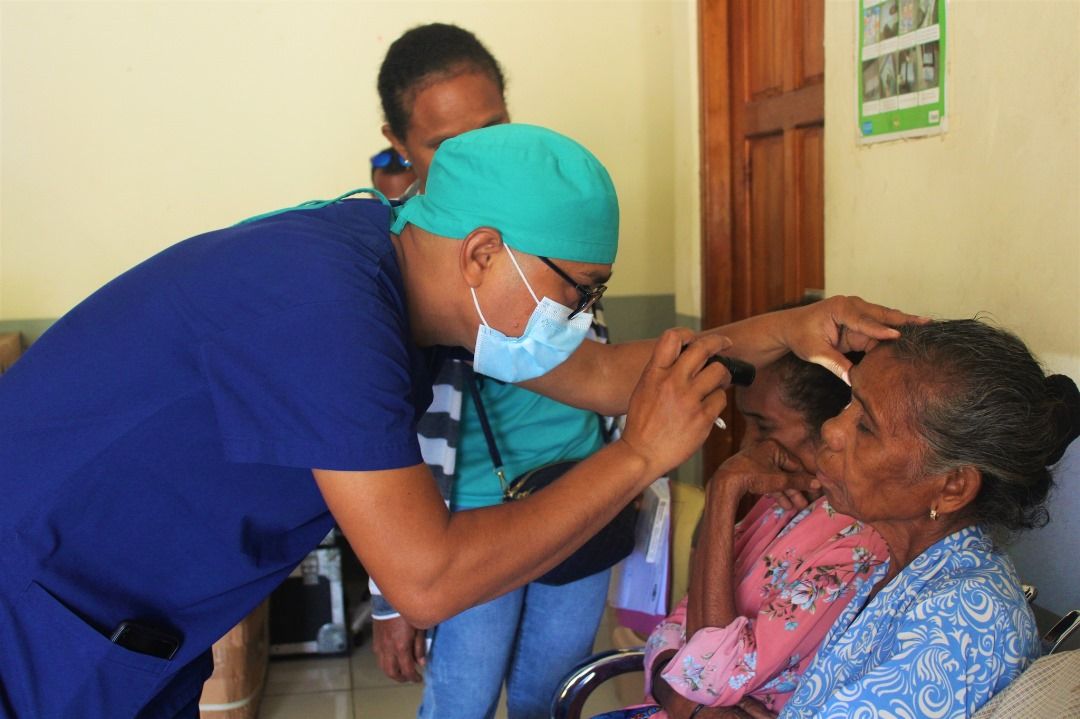
Timor-Leste has been validated by the World Health Organization (WHO) as having eliminated trachoma as a public health problem. It is the 33rd country globally and the fourth in the WHO South-East Asia Region to reach this milestone, meaning that all countries in the Region previously known or suspected to require interventions for trachoma have now been validated as having eliminated the disease as a public health problem.
The elimination of trachoma as a public health problem in Timor-Leste follows sustained efforts by the Ministry of Health to document the epidemiology of the disease in the country. While historical maps suggest that trachoma was not endemic in areas that are now known as Timor-Leste, it was known to be a public health problem in many neighbouring parts of South and South-East Asia, Australia, and the Pacific.
To verify the country’s epidemiological situation, Timor-Leste conducted a Rapid Assessment of Avoidable Blindness in 2016, which found no evidence of trachoma. Further investigations were conducted between 2015 and 2017, including eye examinations of schoolchildren on Atauro Island, screening of patients at clinics in six referral hospitals and five district eye services, and house-to-house case searches across 110 households in communities previously identified as potentially endemic for trachoma. No signs of trachoma were found in any of these investigations, leading researchers to conclude that population-based prevalence surveys were not warranted.
Serological evidence has since reinforced this conclusion. A survey conducted in 2022–2023 measured antibodies to Chlamydia trachomatis among young children and found seroconversion rates consistent with little or no ongoing transmission. This finding was further supported by a nationwide integrated neglected tropical disease survey conducted in 2025.
Because active disease has not reached levels requiring public health intervention, Timor-Leste has not needed to implement the population-level components of the WHO-endorsed SAFE strategy. It has, nonetheless, built the capacity to manage individual cases as they arise. Trichiasis surgery is available through the National Eye Centre at Hospital Nacional Guido Valadares in Dili, where resident ophthalmologists are trained in bilamellar and posterior lamellar tarsal rotation techniques, with outreach services extending care to municipal clinics. Broader national efforts to expand access to eye care, including plans to decentralise specialist services and strengthen the eye health workforce, are set out in the National Eye Health Strategy 2021–2050 and its five-year operational plan.
“Timor-Leste's validation shows that elimination can rest on rigorous evidence as much as on treatment scale-up, and is a reminder that the absence of disease still needs to be proven, not presumed," said Michaela Kelly, Chair, International Coalition for Trachoma Control. “ICTC congratulates the Government of Timor-Leste and all the partners who contributed to this achievement.”
Timor-Leste's validation shows that elimination can rest on rigorous evidence as much as on treatment scale-up, and is a reminder that the absence of disease still needs to be proven, not presumed— Michaela Kelly, Chair, ICTC
In a statement to ICTC, Dr Nilesh Buddha, Officer-In-Charge, WHO South-East Asia Regional Office said: “Timor-Leste’s achievement marks an important milestone for the country and the entire WHO South-East Asia Region. With this validation, all countries in the Region where trachoma was identified, have now eliminated the disease as a public health problem. This remarkable regional progress reflects decades of sustained national leadership, strong surveillance and collective action by governments, communities, health workers and partners. I congratulate Timor-Leste on reaching this important public health goal, which brings the Region one step closer to achieving the 2030 targets for neglected tropical diseases.”
Trachoma is targeted for global elimination as a public health problem under Sustainable Development Goal target 3.3 and the neglected tropical diseases road map 2021–2030. WHO estimates that, as of March 2026, 92 million people still live in areas requiring the A, F and E components of the SAFE strategy to eliminate trachoma as a public health problem.
Other countries validated by WHO as having eliminated trachoma as a public health problem include Algeria, Australia, Benin, Burundi, Cambodia, China, Egypt, El Salvador, Fiji, The Gambia, Ghana, India, the Islamic Republic of Iran, Iraq, the Lao People's Democratic Republic, Libya, Malawi, Mali, Mauritania, Mexico, Morocco, Myanmar, Nepal, Oman, Pakistan, Papua New Guinea, Saudi Arabia, Senegal, Togo, Tunisia, Vanuatu, and Viet Nam.
ICTC observers that supported Timor-Leste include Tropical Data and the World Health Organization.