
Reaching the last mile: Inclusive delivery of trichiasis surgery among Twa communities in Tanganyika, Democratic Republic of Congo
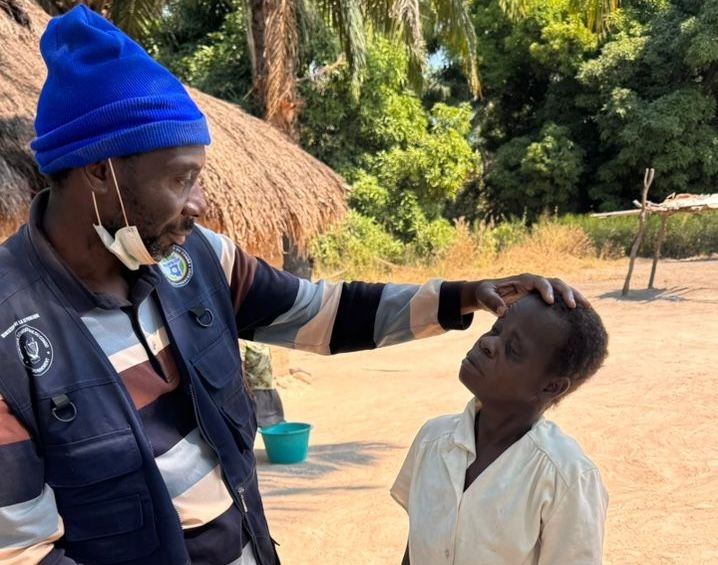
This case study is part of the International Coalition for Trachoma Control’s special series on special populations, published for International Day of the World’s Indigenous Peoples. It serves as a companion case study to the ICTC Special Populations toolkit.
Trachoma remains a public health problem in several provinces of the Democratic Republic of the Congo (DRC). In 2025, the Sight for Africa project was launched to support the country's efforts to eliminate trachoma as a public health problem. Funded by the Children’s Investment Fund Foundation, the project works in partnership with the National Neglected Tropical Diseases Control Programme (PNLMTN-CTP) and the Tanganyika Provincial Health Division to expand access to trachomatous trichiasis (TT) surgery.
As implementation progressed, campaign coverage results suggested up to 89% of the population in Tanganyika province were being reached. Closer examination of the results however revealed some important equity challenges. Twa communities in Tanganyika Province, many of whom experience displacement and mobility linked to chronic insecurity, were being reached less consistently than more settled populations through routine TT case-finding and surgical outreach.
The Twa are an Indigenous people of the Congo Basin and among the earliest inhabitants of the Democratic Republic of the Congo. Traditionally hunter-gatherers with a strong dependence on forest resources, many Twa communities have become increasingly sedentary due to deforestation, agricultural expansion, mining activities, and conservation policies that have reduced access to their ancestral lands. In Tanganyika Province, where they represent a significant proportion of the population, the Twa have historically faced social, economic, and political marginalization, characterized by limited access to land, education, healthcare, and local governance structures. This long-standing exclusion and discrimination have contributed to poverty, vulnerability, and recurring tensions with neighboring Bantu communities.Despite representing a substantial proportion of identified need, surgical coverage in predominantly Twa communities was just 27%.
Field teams identified several factors contributing to lower uptake, including insecurity that limited safe access, population mobility, misconceptions about surgery and fears that the procedure would involve removal of the eye.
Adapting services to reach underserved communities
Rather than applying a single delivery model across all communities, program teams adapted their approach. Engagement with Twa community leaders became central to planning and outreach activities. By involving trusted local leaders, health workers were better able to address misconceptions, build confidence in TT surgery and improve access to communities affected by insecurity.
At the same time, the program strengthened the quality of surgical services through training for TT surgeons, ophthalmologists and supervisory teams in line with WHO-recommended standards. Combining high-quality clinical services with stronger community engagement helped improve both access to and acceptance of surgery. Between November 2025 and March 2026, TT surgery acceptance increased substantially from 64% to 78%, while refusal rates declined from 36% to 23%.
Lessons for trachoma programs
The experience in Tanganyika highlights several lessons that may be relevant for programmes working with Indigenous, mobile and underserved populations.
Firstly, disaggregated programme data can help identify inequities that are not apparent from overall coverage figures. While FGC campaigns achieved high coverage overall, analysing data by community revealed substantial differences in access to TT surgery.
Secondly, meaningful engagement with community leadership can strengthen programme delivery. Working with trusted leaders helped address misinformation, improve acceptance of surgery and support outreach in challenging settings.
Finally, service delivery approaches need to reflect local realities. In areas affected by insecurity, displacement and population mobility, flexible planning and locally adapted outreach strategies may be needed to ensure that those most at risk are not left behind.
As the Sight for Africa project continues, program teams are exploring opportunities to better understand the barriers affecting Twa communities, including through future research on knowledge, attitudes and practices. Their experience reinforces a broader principle for trachoma elimination: reaching the last mile requires not only high-quality clinical services, but also approaches that are designed with the communities they aim to serve.
To learn more about implementing trachoma interventions for hard to reach communities, including refugees, internally displaced persons, indigenous and nomadic communities, download Delivering trachoma interventions to special populations: A toolkit for program managers, published by the International Coalition for Trachoma Control.
Photo provided by CBM International.