
Eritrea eliminates trachoma as a public health problem
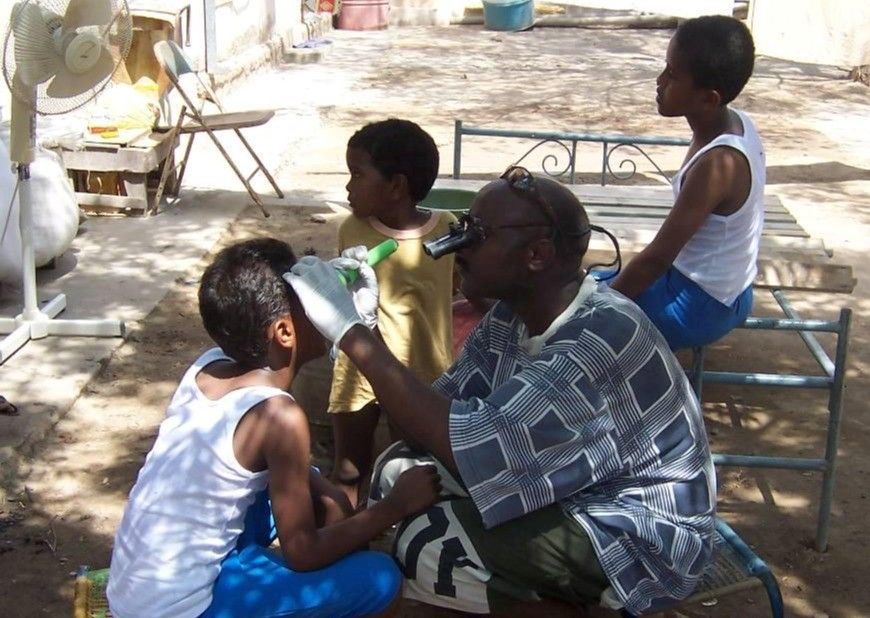
Eritrea eliminates trachoma as a public health problem
Eritrea has been validated by the World Health Organization (WHO) as having eliminated trachoma as a public health problem, becoming the 34th country globally and the 11th in the WHO African Region to reach this milestone.
Trachoma, the world’s leading infectious cause of blindness, has been recognised as endemic in Eritrea since at least the 1950s. In 1960, three years after the country’s first eye hospital opened, a survey of 10 villages in the former province of Serayé found signs of trachoma in 97% of the 5,015 people examined. The prevalence of trachomatous trichiasis (TT), the blinding stage of trachoma, was estimated to be 7% in people of all ages.
Eritrea established its national trachoma programme in 2006 within the Ministry of Health’s National Blindness Prevention Programme. Its mandate was to map trachoma prevalence nationwide and implement the WHO-endorsed SAFE strategy (surgery for trichiasis, antibiotics to clear infection, facial cleanliness and environmental improvement) in all trachoma-endemic districts. Baseline surveys were conducted in all 58 sub-Zobas (districts) in the country. The initial surveys found that the prevalence of trachomatous inflammation—follicular (TF) was up to 69% among children aged 1–9 years in May Mine district.
Antibiotic mass drug administration began in 2011 and continued until 2022, using azithromycin donated by Pfizer Inc. through the International Trachoma Initiative. Trained community drug distributors visited households to offer antibiotics to eligible residents and made follow-up visits to offer treatment to anyone who had been absent. Impact surveys conducted between 2014 and 2022 eventually confirmed that in all 25 treated districts the TF prevalence among children aged 1–9 years was below the 5% elimination threshold.
In Adi Quala, TF prevalence rose above the elimination threshold after treatment had stopped, prompting the program to resume mass drug administration. A surveillance survey in 2024 confirmed that prevalence remained below 5% after the additional treatment ended.
Welcoming the milestone, Darren Back, Vice President, Global Health Investments, Pfizer Inc said: “Eritrea’s elimination of trachoma as a public health problem is a remarkable achievement and a powerful example of what sustained country leadership and long-term partnership can accomplish. Pfizer is proud to have supported Eritrea’s progress through our donation of more than three million azithromycin doses in the country since 2009.”
Alongside mass drug administration, Eritrea expanded services to find and treat people with TT. The country built a network of 34 TT surgery centres, 74 certified active TT surgeons and 1,069 trained case finders. In 2023, geostatistical modelling helped identify 14 districts where further efforts to manage TT were needed. Between October 2023 and March 2026, trained case finders visited households across these districts to screen residents aged 15 years and older for signs of TT. They referred suspected cases to trained TT surgeons, who confirmed the diagnosis and offered surgery. The programme organised additional outreach to reach patients who had not attended for assessment or care.
To reduce disease transmission, the Ministry of Health’s Health Promotion Department promoted hygiene through schools, local radio, national television and messages screened in health facilities. Face washing and sanitation messages were also included in MDA campaigns and annual hygiene events. Eritrea has implemented community-led total sanitation since 2008. By July 2025, 93% of the country’s 2,830 villages had been certified open defecation free.
From mapping all 58 districts to searching for trichiasis cases door-to-door across entire communities, Eritrea made sure no one was left behind— Michaela Kelly, Chair, ICTC
“Eritrea’s validation shows what a nationally owned program can achieve when high-quality data guide every decision" said Michaela Kelly, Chair, International Coalition for Trachoma Control. "From mapping all 58 districts to searching for trichiasis cases door-to-door across entire communities, Eritrea made sure no one was left behind. The International Coalition for Trachoma Control congratulates the Government of Eritrea and all the communities and partners who contributed to this achievement.”
To sustain trachoma elimination, Eritrea will monitor trachoma through its routine health information system and continue providing TT surgery at established centres. Eritrea is also planning to conduct surveillance surveys every three years in selected districts at greater risk of trachoma returning.
Globally, trachoma is targeted for elimination as a public health problem by 2030 through the global neglected tropical diseases road map, endorsed by WHO Member States in November 2020 through World Health Assembly decision 73(33). In March 2026, an estimated 92 million people were living in trachoma-endemic areas requiring interventions against the disease, a 94% reduction from the number estimated to be at risk in 2002.
The elimination of trachoma as a public health problem in Eritrea was supported by multiple ICTC members and observers, including CBM International, The END Fund, The Fred Hollows Foundation, the International Trachoma Initiative, Pfizer Inc., Tropical Data, UNICEF and WHO.