
Crossing borders to leave no one behind: A case study on cross-border trachoma elimination in East Africa
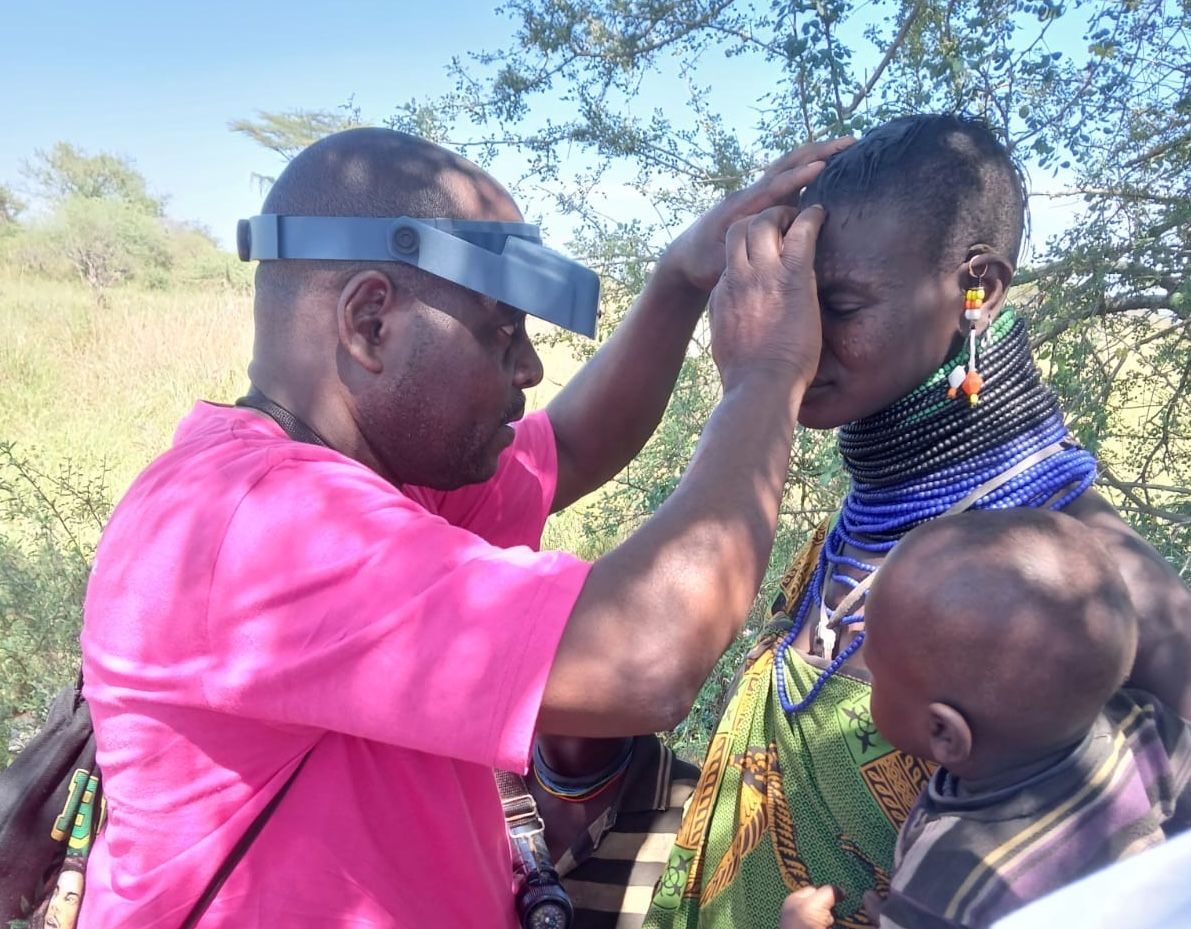
This case study is part of the International Coalition for Trachoma Control (ICTC) special series on special populations, published to mark the International Day of the World's Indigenous Peoples. It accompanies the ICTC Special Populations Toolkit.
Trachoma is the world's leading infectious cause of blindness. In East Africa, eliminating trachoma among nomadic pastoralist communities has required programs to look beyond conventional administrative boundaries. Across the border regions of Kenya, Tanzania, and Uganda, persistent transmission has reflected not only geographic remoteness but also the reality that communities, livestock, markets, and seasonal migration routes extend across national borders, while health systems are generally planned and implemented within them.
The challenge
Over the past two decades, Kenya, Tanzania, and Uganda have made substantial progress toward trachoma elimination through implementation of the WHO-recommended SAFE strategy (surgery, antibiotics, facial cleanliness, and environmental improvement). However, transmission persists in border areas, including the Ateker belt along the Kenya–Uganda border and Maasai-inhabited areas spanning Kenya and Tanzania. These regions are home to the Turkana, Karimojong, Jie, Dodoth, and Maasai peoples, whose livelihoods depend on seasonal movement in search of water and pasture.
National borders were established long after these migration routes and kinship networks. Health programs, however, are planned, financed, and monitored within fixed administrative boundaries. As a result, families registered in one district may be across the border when medicines are distributed or surveys are conducted. Mobile populations may therefore be missed by both countries, reached too late, or counted more than once. As a former animal health worker in Uganda's Kotido District observed, the most reliable way to locate pastoralist communities is often to "follow the cattle." The challenge was not mobility itself but ensuring that health systems could adapt to it.
The approach
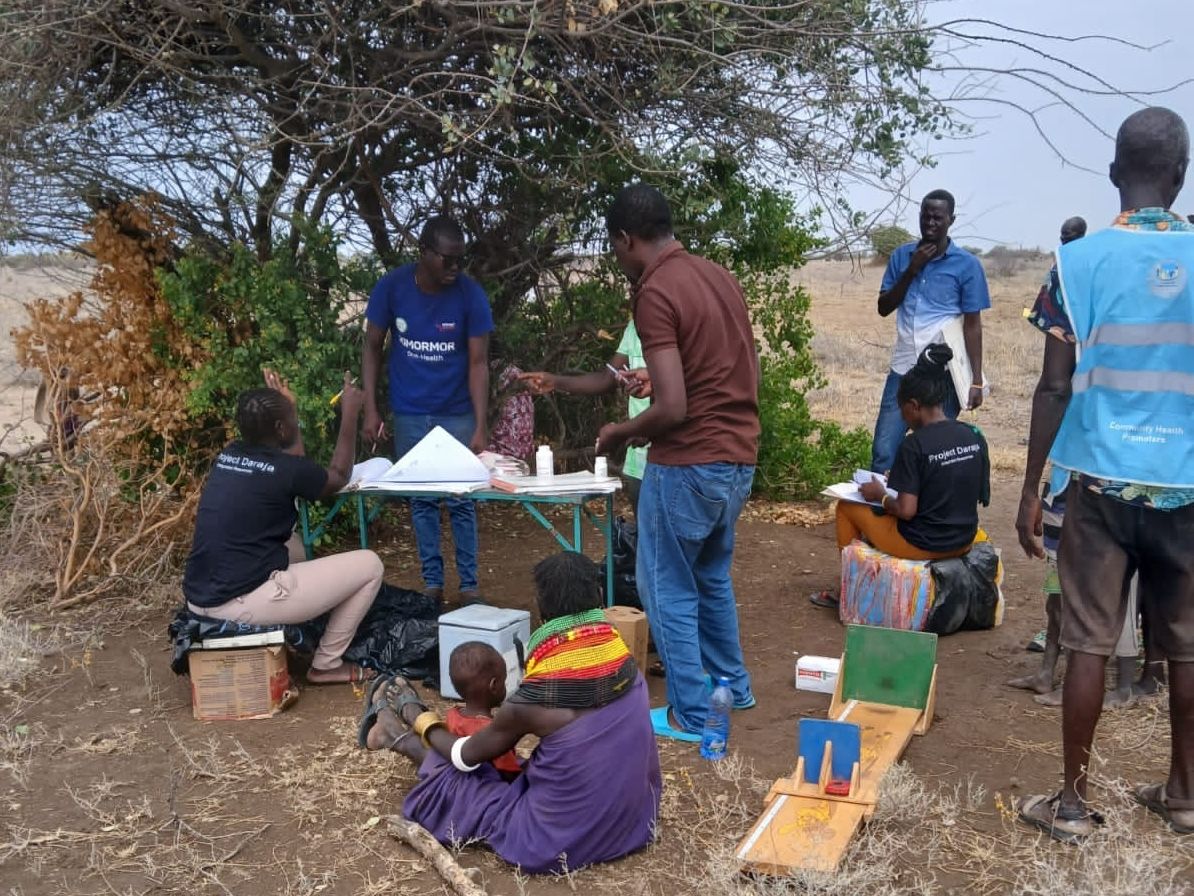
Recognizing that trachoma transmission does not stop at national borders, health authorities began strengthening cross-border collaboration. In 2019, joint mass drug administration and trachomatous trichiasis services reached an additional 40,000 people across eight nomadic border districts. Kenya and Uganda expanded this approach in October 2021 through their first formally synchronized cross-border campaign, aligning implementation with the seasonal movement of Turkana and West Pokot communities. In 2022, Kenya and Tanzania applied a similar model in Maasai areas, targeting more than 1.3 million people across the counties and districts of Kajiado, Narok, Ngorongoro, and Longido. Coordinating implementation reduced the likelihood that families moving with their livestock would be missed between separate national campaigns.
Effective synchronization required more than aligning campaign dates. Countries exchanged information on migration patterns, coordinated medicines and logistics, harmonized community messaging, and maintained communication before, during, and after implementation so teams could respond as communities moved.
Community leadership was central to this approach. Elders, cultural leaders, cattle camp leaders, and community health workers helped program teams understand seasonal movement patterns, identify temporary settlements, communicate campaign dates through trusted networks, and identify individuals who had been missed. This shifted community engagement beyond one-way mobilization toward joint planning, recognizing pastoralist knowledge as an essential component of program implementation.
Results
The approach enabled programs to recognize border communities as a single epidemiologically connected population. It strengthened information sharing on migration routes, reduced duplication and missed coverage, and established relationships that supported the delivery of other health interventions.
The experience also highlighted ongoing challenges, including budgets tied to administrative boundaries, uncertainty in population estimates, reporting systems not designed for cross-border implementation, and coordination mechanisms that often relied on personal relationships rather than institutional arrangements.
Lessons learned
Five key lessons emerged.
Communities living across borders ould be considered a single epidemiologically connected population. Joint microplanning should identify where people are likely to be during implementation, rather than relying solely on their usual place of residence.
Conducting campaigns during the same period does not, on its own, constitute coordinated implementation. Countries should also align population estimates, training, community messaging, supervision, and procedures for revisiting settlements that may have been missed.
Reaching mobile populations requires additional resources. Budgets should account for longer travel distances, mobile treatment points, local guides, repeat visits, and dedicated cross-border focal points to support ongoing coordination.
Program planning should incorporate pastoralist knowledge from the outset. Livestock and veterinary services can provide valuable information on herd movement, water availability, and local security conditions, helping programs adapt implementation to community movement.
Cross-border collaboration should be institutionalized rather than implemented as a short-term initiative. Persistent transmission within one mobile population can delay national elimination. Cross-border populations should therefore be integrated into national strategies, budgets, surveillance systems, and elimination dossiers, with attention to the full SAFE strategy rather than antibiotic distribution alone.
For program teams, these lessons can be summarized in a practical framework: identify who moves, understand where and when they move using migration corridors and seasonal calendars, engage those with trusted knowledge of community movements, and adapt implementation through synchronized campaigns, flexible financing, and shared monitoring.
Conclusion
The experience of Kenya, Tanzania, and Uganda demonstrates that pastoralist mobility need not be a barrier to trachoma elimination. Success depends on whether health systems are designed to reflect the realities of how people live and move. Cross-border collaboration enabled countries to replace isolated national campaigns with a coordinated approach that follows communities across administrative boundaries, values Indigenous knowledge, and strengthens partnerships toward a shared elimination goal.
Achieving equitable disease elimination requires more than delivering effective interventions. It requires health systems that identify populations at risk of being missed, understand the factors contributing to exclusion, and adapt program delivery accordingly. Trachoma does not recognize national borders, and elimination efforts must be designed with the same principle in mind.
Photo provided by The Fred Hollows Foundation